

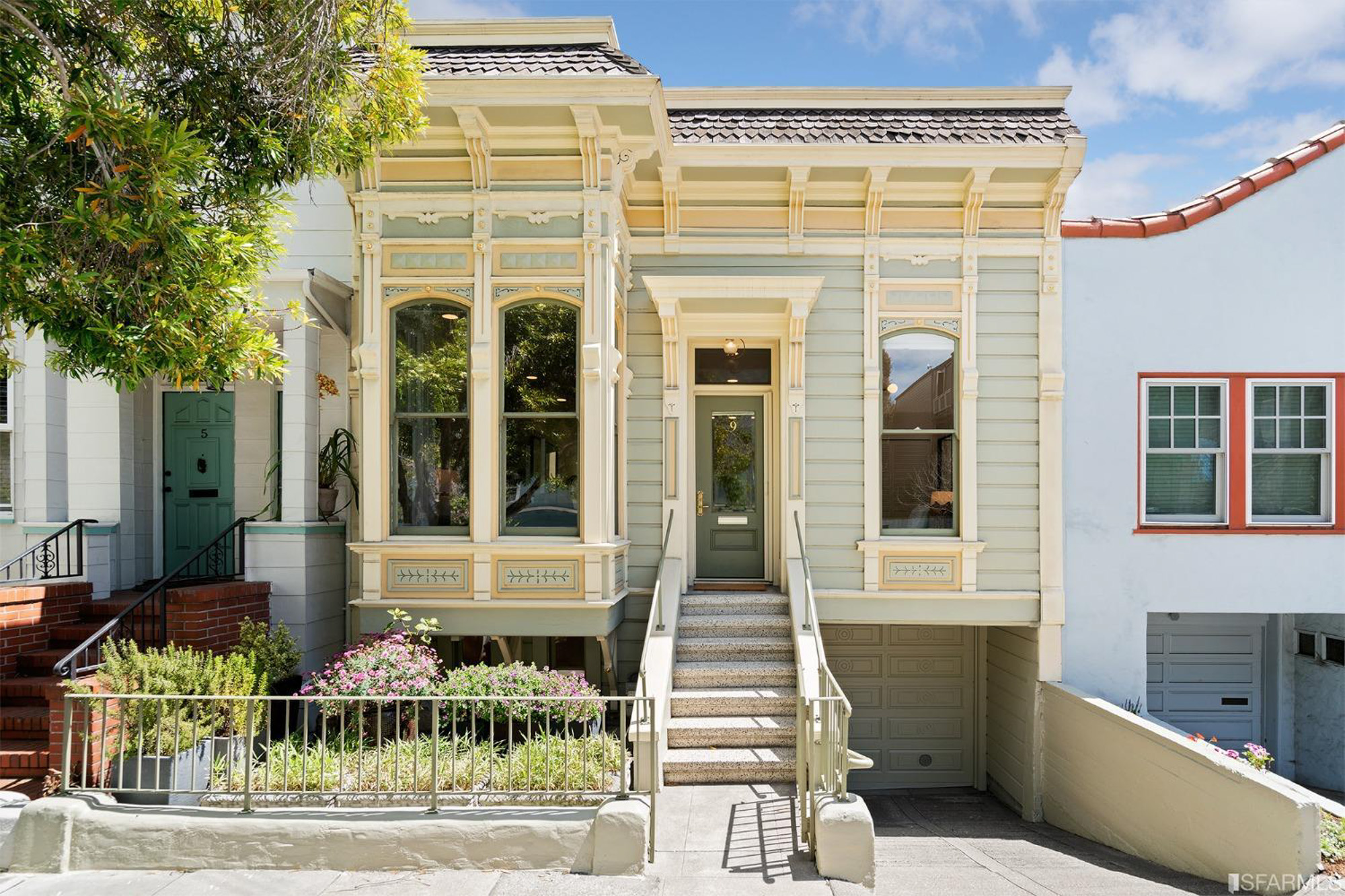
The Bay Area is one of the most architecturally rich places in the country to own a home. San Francisco's Victorians and Edwardians, the Craftsman bungalows of Oakland and Berkeley, the midcentury homes tucked into the hills of Marin and the East Bay - each one carries something that newer construction simply does not have: a point of view. A set of proportions and details that reflect how people lived, what they valued, and how they understood beauty.
That is also what makes renovating a historic home so particular. The decisions you make inside a Victorian house or a Craftsman bungalow are not the same decisions you would make in a tract home built in 2005. The architecture is part of the brief. And the most common mistake I see homeowners make, the one that is hardest to undo, is treating it as a blank slate.
This guide covers what historic home renovation in the Bay Area actually requires: what to preserve, what can be thoughtfully updated, and how to make a 100-year-old home work for the way you live today without losing what made you want to live there in the first place.
Know What You Have Before You Touch Anything
The first step in any historic renovation is not design. It is reading the house.
.jpg)
Bay Area homes from the Victorian, Edwardian, and Craftsman eras were built with a logic that is often obscured by decades of well-meaning but misaligned updates. Drop ceilings installed over original plaster. Walls painted over intricate millwork. Additions bolted on without regard for the original roofline or rhythm of the facade. Before any design decisions are made, it is worth understanding which elements are original, which are later alterations, and which interventions, however well-intentioned, should simply be undone.
Original features worth identifying and protecting include: ceiling heights and cornice profiles, door and window surrounds, original wood floors and their species, built-in cabinetry and millwork, period hardware, and the overall proportional logic of rooms. These are the elements that give a historic home its soul. They are also, in many cases, irreplaceable.
Not everything in an old house is precious. Later alterations - a 1970s kitchen remodel, a bathroom addition that ignored the home's original framing, mismatched flooring from three different eras - are often the things that make historic homes feel tired and disjointed. Part of the work of a historic renovation is deciding what to keep and what to carefully remove.
Lean Into the Architecture, Not Away From It
This is the principle I come back to most consistently with clients who own historic homes: the architecture is not a constraint. It is the design brief.
When someone moves into a San Francisco Victorian or an Alameda Queen Anne and the first instinct is to open it up, strip out the detail, and make it feel contemporary, I understand the appeal. Contemporary interiors are clean. They photograph well. They feel uncluttered in a way that older homes, with their defined rooms and layered millwork, sometimes do not.
But that instinct usually produces a house that conflicts with itself. The bones are Victorian. The interior is trying to be something else. Neither reads as resolved, and neither feels genuinely at home in its own skin.
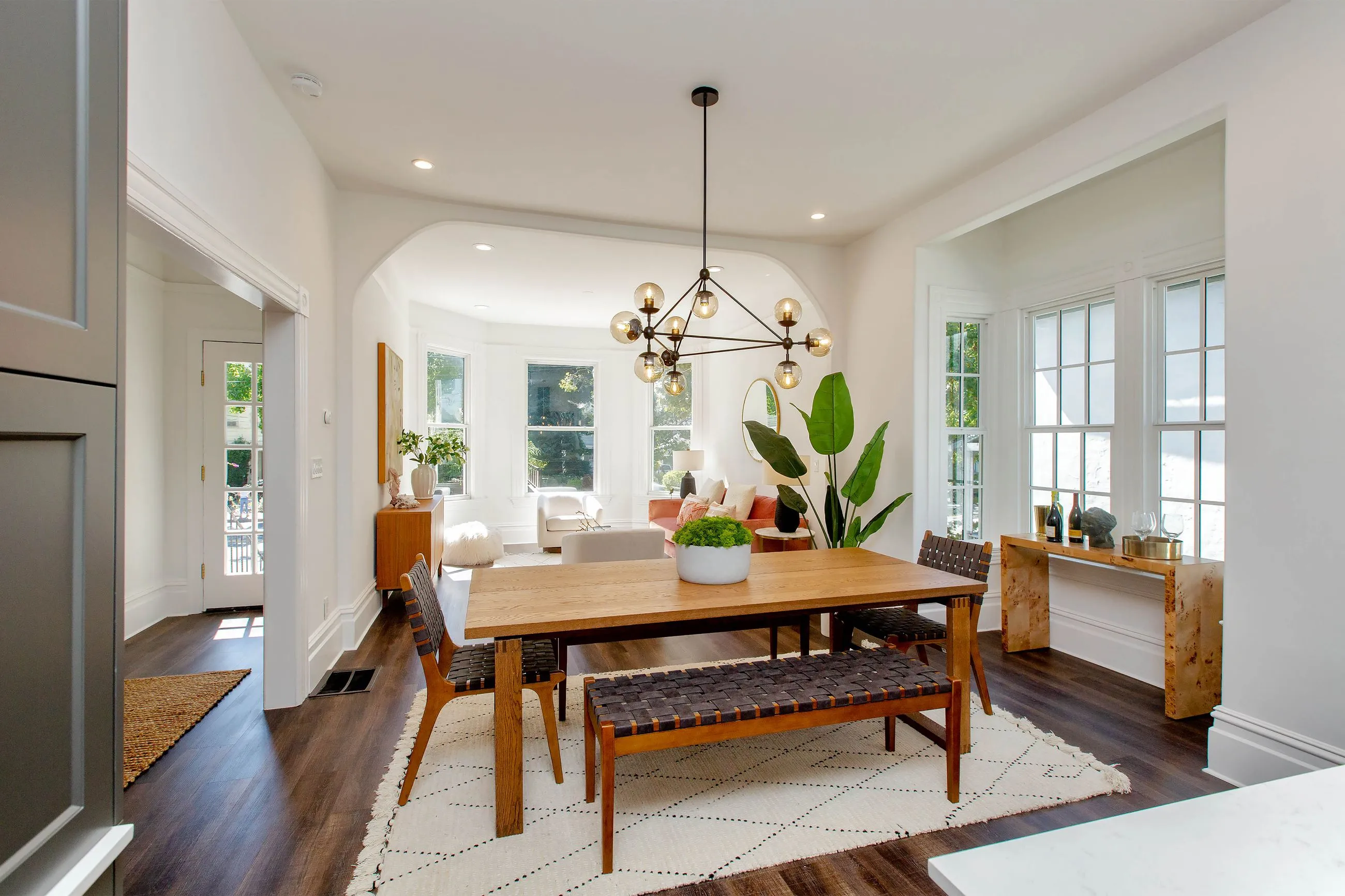
The homes that age best, and that clients are consistently most satisfied with years later, are the ones that made peace with their architecture. That does not mean freezing the home in time or refusing to modernize. It means understanding what the house wants to be, and designing from there.
In the Queen Anne project we completed in Alameda, the goal was never to preserve a museum. It was to make a registered historic home genuinely livable while keeping the period details that give it its character. The millwork stayed. The proportions stayed. The palette was updated, the kitchen was reconsidered, and the bathrooms were redesigned entirely - but always in a way that felt continuous with the house rather than imposed on it. The result is a home that reads as itself.
The Specific Challenges of Bay Area Historic Homes
Renovating a historic home anywhere requires care. Renovating one in the Bay Area comes with an additional layer of complexity that homeowners should understand before they begin.
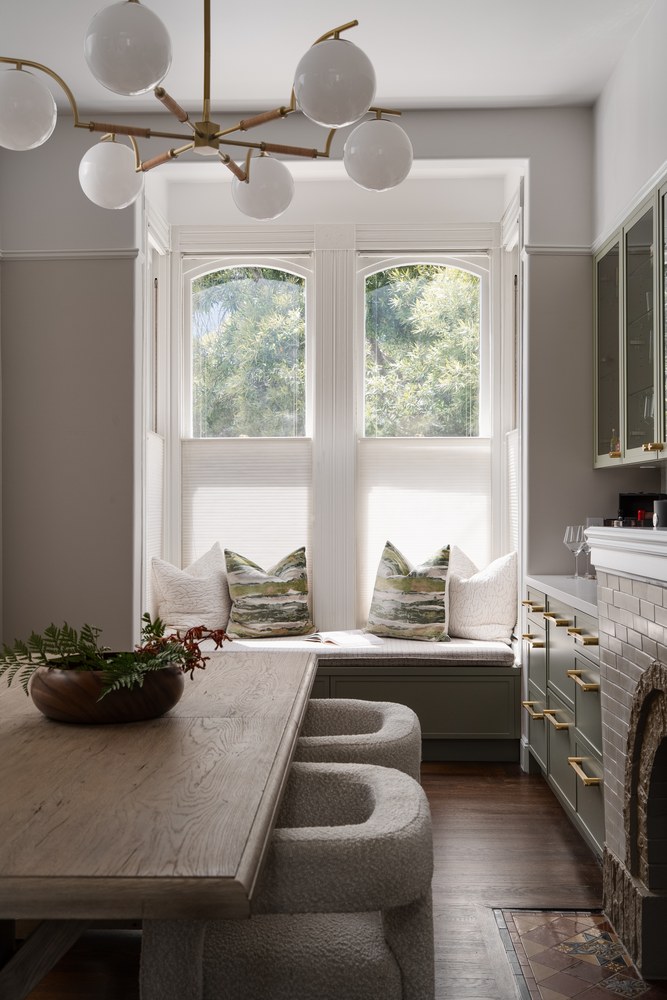
Victorian and Edwardian homes in San Francisco were built quickly, often in rows, by developers working from pattern books. That means they share many characteristics - bay windows, decorative facades, defined room sequences - but they also carry the irregularities of older construction: out-of-plumb walls, non-standard dimensions, plumbing and electrical systems that have been layered and re-layered over more than a century. Opening a wall in a San Francisco Victorian is rarely as simple as it looks on paper.
Craftsman bungalows in Oakland and Berkeley were built around a different philosophy: honest materials, visible structure, the integration of indoor and outdoor living. A craftsman home renovation that ignores that philosophy -that installs sleek, handle-free cabinetry and pours polished concrete floors - produces a home that feels disconnected from what it is. The Craftsman aesthetic rewards materials that age well: wood, stone, and tile that earn their place over time.
Midcentury homes in Marin and the East Bay hills present their own set of considerations. These homes were designed around views, natural light, and the flow between interior and exterior. A mid-century renovation that closes off that relationship - that treats the home as a collection of interior rooms rather than an extension of the landscape - misses the point of the architecture entirely.
In all of these cases, the starting point is the same: understand what the architecture is doing, and let that understanding lead the design.
What You Can Update, and How to Do It Well
Leaning into a historic home's architecture does not mean living without a functioning kitchen, a comfortable bathroom, or the conveniences of modern life. It means updating those elements in a way that feels continuous with the house.
Kitchens in historic Bay Area homes are almost always candidates for significant intervention. Many were added or reconfigured in the mid-twentieth century with little regard for the original house, and they frequently occupy awkward floor plan positions that cut the home off from its own light and circulation. Rethinking the kitchen - its relationship to adjacent rooms, its layout, its connection to the back of the house - is often the single most transformative move in a historic renovation. The key is to do it in a way that the house would have done it: with well-proportioned cabinetry, materials that have depth and texture, and a level of craft that matches the existing millwork throughout the home.
.jpg)
Bathrooms in Victorian and Edwardian homes tend to be small by modern standards. There is usually room to improve both the layout and the finishes without wholesale expansion. Keeping period-appropriate tile profiles, selecting hardware with the right visual weight, and paying attention to ceiling height and trim details are what separate a bathroom renovation that feels at home from one that feels dropped in from somewhere else.
Lighting and electrical are almost always in need of updating in homes of this age. The opportunity here is to restore what the original design intended - generous natural light, layered artificial light that relates to the room's proportions - rather than simply adding recessed cans in a grid and calling it done.
Historic Districts, Landmark Status, and What to Know Before You Start
Many of the most desirable historic neighborhoods in the Bay Area carry additional review requirements that affect what you can and cannot do. San Francisco's historic districts, Oakland's preservation overlay zones, and various local landmark designations each come with their own rules, and discovering those rules mid-project is one of the most expensive things that can happen on a renovation.
If your home is located in a historic district or has any form of landmark designation, that information should be part of your design brief from day one, not an afterthought. Work with a team that understands local preservation requirements and has experience navigating the review process. The permitting landscape in San Francisco and the surrounding Bay Area is already complex; adding historic review on top of it requires a clear strategy and realistic expectations about timeline.
The Evanston Project: A Different Kind of Historic Work

Not every historic renovation takes place in a Victorian flat or an Alameda Craftsman. The Evanston project, which earned recognition as a Best Small Kitchen from NKBA, presented a different kind of historic work: a Prairie Style kitchen that required the same principles of integrity and restraint, applied to a different architectural language.
The goal was to honor the geometry and material honesty that define Prairie design while creating a kitchen that functions at a genuinely high level. Custom cabinetry, stone selection, and appliance integration were all made in service of the architecture - not as expressions of trend or personal style in isolation. The result is a kitchen that feels as though it was always meant to be exactly what it is.
That is the standard we hold for every historic project, regardless of the style. Not "what do we want this to look like," but "what does this house want to be?"
How to Know If Your Home Needs a Historic Approach
Not every older home requires a full historic renovation strategy. But if you recognize your situation in any of the following, the approach matters.
Your home was built before 1960 and retains original architectural details - millwork, windows, floors, ceiling profiles - that you want to keep. The previous renovation or additions feel out of place with the rest of the house. You have been told, or suspect, that your home may be in a historic district or have some form of preservation status. You want to update the home significantly but are not sure how to do it without losing what you love about it. You have seen other historic homes that were renovated in ways that made them feel less like themselves, and you want to avoid that outcome.
If any of these describe your situation, the design approach needs to account for the architecture from the beginning. Finishes and furnishings can come later. The bones have to be right first.
The House Already Knows What It Wants to Be
The most successful historic renovations I have worked on share one quality: the clients came into the project genuinely curious about their home, not determined to impose something on it. They wanted to understand what the house was doing before they decided what to change.
That curiosity produces better outcomes than any amount of design inspiration. A house that has been standing for a century has already proven something. The renovation is not a correction of that history. It is a continuation of it.
If you are thinking about renovating a historic home in the Bay Area and want to start the conversation with a team that takes the architecture seriously, we would be glad to talk. Start with a consultation and we can work through what your home is, what it wants to be, and what it will take to get there.
Frequently Asked Questions About Renovating a Historic Home in the Bay Area
Can I open up the floor plan of a Victorian or Craftsman home?
In many cases, yes — but it requires careful thought. Victorian and Craftsman homes were designed around defined room sequences, and removing walls indiscriminately tends to work against the architecture rather than with it. Selective wall relocations, improved openings, and better connections between rooms can significantly improve flow without gutting the spatial logic the home was built around. Each situation is different and depends on structure, floor plan, and what the home's original design was actually trying to do.
What is the difference between a historic district and a landmark designation?
A historic district is a geographically defined area where exterior alterations to buildings are subject to review, typically by a local preservation commission. A landmark designation applies to an individual property and usually carries more specific protections. Both can affect the scope and timeline of a renovation project, and both require different levels of documentation and approval. If you are unsure whether your property falls into either category, it is worth finding out before you begin design.
How do I know which elements of my home are original versus later additions?
This is one of the most valuable things an experienced designer or architect brings to a historic project. Original elements tend to share consistent material quality, proportional logic, and construction methods. Later alterations often reveal themselves through changes in material, inconsistencies in trim profiles, or construction techniques that did not exist at the time the home was built. A thorough site assessment at the beginning of a project helps clarify what is worth keeping and what is worth reconsidering.
Do historic renovations in the Bay Area cost more than standard renovations?
They often do, though the premium varies significantly by project. Matching original millwork profiles, working with non-standard dimensions, navigating historic review, and the additional care required to preserve original material all add time and cost. That said, the alternative — renovating without regard for the existing architecture — tends to produce results that neither honor the home nor perform well for resale. The investment in a thoughtful historic approach tends to hold its value.
Does Your Home Need a Historic Renovation Approach?
A self-assessment for Bay Area homeowners renovating a Victorian, Edwardian, Craftsman, or mid-century home

Increase the potential of your home
